
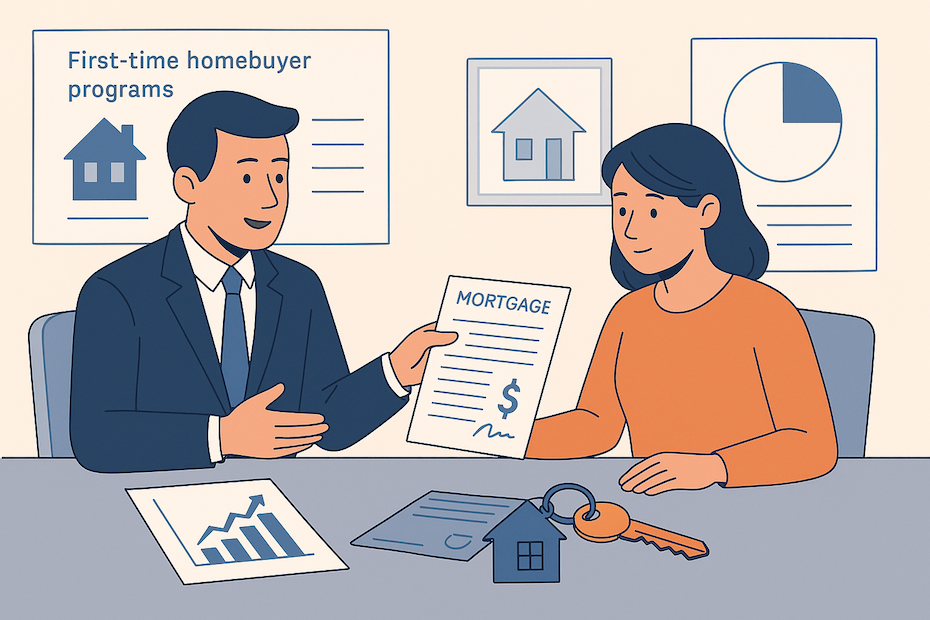
You can secure your first mortgage with confidence by understanding key down payment strategies, loan programs, lender selection criteria, and hidden costs before you commit.
This guide equips you with 10 mortgage tips designed to save you money, improve your loan approval odds, and position you for long-term success in homeownership. You’ll learn how to choose the right financing, budget beyond the listing price, and leverage local programs for first-time buyers.
1. Determine How Much Down Payment You Need
You’re not locked into a 20% down payment. Many first-time buyer programs allow 3.5% down—or even zero if you qualify for USDA or VA loans.
While a smaller down payment preserves cash for emergencies, it often triggers private mortgage insurance (PMI), which increases monthly costs. A larger down payment builds equity faster and can improve your loan terms.
The right choice depends on your savings, local property prices, and comfort with ongoing monthly payments. Compare scenarios with your lender to see how different down payment percentages affect affordability.
2. Explore Mortgage Programs for First-Time Buyers
First-time homebuyers can access FHA, Conventional 97, USDA, VA, and state-specific down payment assistance programs. FHA loans require only 3.5% down and offer flexible credit standards. USDA and VA loans may require no down payment.
Many states offer grants or forgivable loans for down payments and closing costs. A Mortgage Credit Certificate (MCC) can also lower your annual tax bill, improving cash flow.
Investigating these programs early allows you to tailor your home search to properties and loan types that match your qualifications.
3. Choose the Right Lender for Your Goals
Don’t settle for the first lender you meet—compare at least three. Ask about their loan programs, fees, rate lock options, and whether they work with local or state assistance programs.
Some lenders specialize in first-time buyer loans, offering streamlined processes or reduced fees. Others may be more flexible on underwriting criteria.
Look for a lender who communicates clearly, provides written estimates, and can commit to closing on time. Your choice directly affects interest rates, fees, and service quality.
4. Account for All Costs Beyond the Home Price
Closing costs typically run 2–6% of the purchase price and include origination fees, title insurance, appraisal, and inspection costs.
Property taxes, homeowner’s insurance, and maintenance expenses can significantly impact your monthly budget. Factor in utilities, HOA dues, and a reserve for repairs—especially in older homes.
Failing to prepare for these costs can lead to financial strain, even if your mortgage payment fits your initial budget.
5. Know How Much You Can Afford—and Qualify For
Lenders generally prefer a debt-to-income (DTI) ratio under 43%. This means your total monthly debts, including your new mortgage, should be less than 43% of your gross income.
A credit score of 620 is common for conventional loans, while FHA loans may allow lower scores. Consistent income and stable employment history also strengthen your application.
Instead of focusing only on lender limits, build a budget based on your actual lifestyle and financial priorities.
6. Improve Your Credit Before Applying
Check your credit reports for errors and dispute any inaccuracies well before you apply for a loan. Even small improvements in your score can unlock lower interest rates and save thousands over the life of your mortgage.
Pay down revolving debt, make all payments on time, and avoid opening new credit accounts during the mortgage process. These steps can prevent last-minute issues during underwriting.
A three- to six-month window of disciplined credit management can make a meaningful difference in your approval and rates.
7. Get Pre-Approved Before House Hunting
A pre-approval letter strengthens your offer and shows sellers you are a serious, qualified buyer. It also gives you a clear picture of your maximum purchase price.
During pre-approval, your lender reviews your credit, income, and debts to determine loan eligibility. This process can also uncover potential issues early, giving you time to address them before making offers.
Without pre-approval, you risk delays or losing out to other buyers in competitive markets.
8. Plan to Stay at Least Five Years
Selling too soon after purchase can lead to losses due to closing costs, moving expenses, and potential market fluctuations.
Staying five years or more allows you to build equity and spread transaction costs over a longer period. This stability can also help you qualify for better refinancing opportunities in the future.
If you expect to relocate within a shorter timeframe, renting may be more cost-effective.
9. Budget for Closing Costs and Emergencies
Reserve funds for unexpected expenses—ideally three to six months of living costs in addition to your down payment and closing costs.
This buffer protects you if you face job loss, repairs, or sudden expenses. Many first-time buyers focus solely on the purchase and overlook post-closing financial needs.
Having reserves protects your home and helps you avoid reliance on high-interest debt in emergencies.
10. Use Local Homebuyer Education and Expert Support
Local homebuyer classes, often sponsored by housing agencies or lenders, provide guidance on mortgage terms, inspections, and negotiations.
Real estate agents and mortgage professionals familiar with your community can connect you to neighborhood-specific loan programs and resources.
Leveraging expert support ensures you avoid common mistakes and make informed decisions at every stage of the process.
How much down payment do first-time buyers need?
First-time buyers may qualify for programs requiring 0–3.5% down, depending on the loan type and available assistance.
In Conclusion
Your first mortgage doesn’t have to be overwhelming. By aligning your down payment, loan program, lender, and budget with your long-term plans, you set yourself up for financial stability and homeownership success. Use every available tool—local programs, expert advice, and disciplined preparation—to make confident, well-informed choices.

Kevin Tudhope is Operations Manager at Equity Investment Mortgage with 10+ years in the mortgage industry. Founder of Tudhope Management Inc., he also leads local franchise operations in Auburn–Opelika and mentors first-time homebuyers and entrepreneurs.