
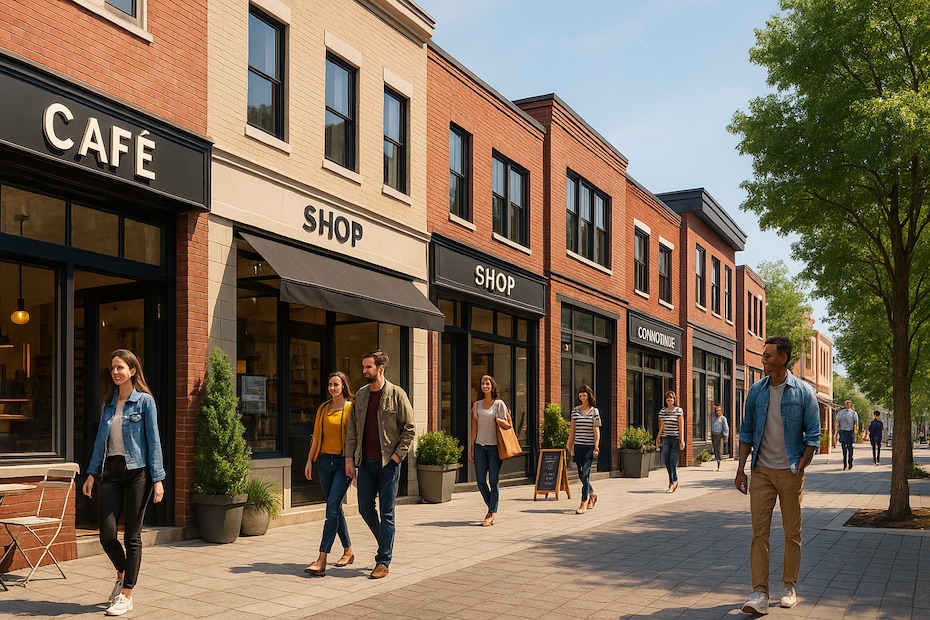
You can turn your neighborhood into a thriving business hub by mobilizing local resources, fostering collaboration, and introducing business infrastructure that attracts entrepreneurs and residents alike. The process starts with community alignment and grows through shared investment, infrastructure, and a clear vision for long-term prosperity.
This guide walks you through how to convert an ordinary neighborhood into a bustling center of commerce and creativity. You’ll learn what real entrepreneurs ask about neighborhood transformation, the steps to attract local investment, how to build supportive policies, and the most effective ways to sustain momentum over time.
What Is a Neighborhood Business Hub?
A neighborhood business hub is a localized ecosystem where small businesses, services, and community activities thrive in close proximity. It’s a place where you can live, work, and connect—where coffee shops, co-working spaces, artisan markets, and service providers operate side-by-side, creating an active flow of people and commerce.
Successful hubs are built on accessibility, diversity, and collaboration. They reduce commuting distances, encourage entrepreneurship, and promote a circular economy—where local money circulates within the community instead of leaving it. In places like Washington, D.C.’s Capitol Riverfront District, such hubs have transformed neglected industrial areas into economic powerhouses by combining retail, housing, and public amenities.
Creating a neighborhood hub isn’t just about buildings—it’s about creating relationships and reinforcing the identity of a place. When people feel connected to the businesses around them, economic participation increases naturally.
How Do You Start a Small-Scale Business Cluster in a Residential Area?
You start by identifying what already exists. Conduct a neighborhood asset map to uncover the potential that’s often hidden in plain sight—vacant lots, underused storefronts, community centers, or even home-based businesses. Mapping your assets gives you a clear picture of what can be leveraged immediately.
Then, build alignment among residents and entrepreneurs. Host listening sessions to discuss what the community lacks—perhaps a local market, repair shop, or digital workspace. From there, launch small-scale pilots like weekend markets, pop-up stores, or food stalls to validate demand. These short-term activations create buzz and demonstrate economic potential to stakeholders.
In Muskegon, Michigan, small pop-up sheds were repurposed into micro-retail units that helped rejuvenate the downtown fringe. The model worked because it started small, proved value, and then scaled. You can replicate this by beginning with 2–3 ventures in a walkable area and gradually expanding into a shared business corridor.
Key actions to prioritize early:
- Map local assets and underused spaces
- Engage residents and property owners in workshops
- Pilot small business activations
- Establish a shared vision document
- Create a volunteer or advisory board to oversee the rollout
This initial momentum sets the foundation for a more organized business hub that can attract investors and city support later.
What Infrastructure and Services Are Essential for Growth?
Every thriving business hub relies on a balance of physical and soft infrastructure.
Physical infrastructure includes utilities, street lighting, public seating, clear signage, safe sidewalks, and reliable internet access. The area must be accessible by foot and public transport—because walkability increases both retail sales and social engagement. Studies show that improving walkability can raise local retail revenues by up to 30%.
Soft infrastructure includes shared marketing campaigns, co-branding initiatives, collaborative events, business support programs, and maintenance management. For instance, a neighborhood can create a single brand identity with unified signage, social pages, and promotional events that highlight all businesses in the area.
Many hubs also use shared facilities—a single building housing cafés, co-working spaces, and small retailers. This model, used in East Oakland’s business redevelopment plan, has proven effective in reducing costs while increasing exposure for small enterprises.
How Do You Gain Community Buy-In and Manage Resistance?
You build trust by inclusion and transparency. Start with listening sessions—not sales pitches. Ask residents and small business owners what they value most and what worries them about development. Many fear rising rents and displacement. Address these openly and introduce safeguards such as capped lease rates or local ownership cooperatives.
You can also create community benefit agreements (CBAs)—written commitments that guarantee local hiring, affordable retail spaces, or reinvestment of profits into public amenities. In East Oakland, this model helped build confidence among long-time residents and reduced tension around redevelopment efforts.
Show tangible benefits early. People support change when they see results—new jobs, cleaner streets, and safer environments. Host monthly updates, share financial progress, and invite community participation in governance.
Trust turns resistance into partnership, and partnership is the fuel of sustainable growth.
How Much Investment Do You Need to Launch a Neighborhood Hub?
The financial requirement varies by size, property condition, and vision. But every project must plan for four cost categories:
- Physical development – renovations, utilities, signage, and safety upgrades.
- Soft costs – marketing, legal compliance, permits, branding.
- Working capital – to sustain the first 6–12 months.
- Reserve funds – for repairs, maintenance, or seasonal dips.
Funding options are wider than most realize. Combine public grants, crowdfunding, local partnerships, and private investors. Many municipalities offer small business development funds or façade improvement grants. In East Oakland, $28.2 million in funding came from public-private partnerships focused on equitable growth.
If you’re starting small, use a phased build strategy—launch with one pilot block or a shared facility before expanding. Crowdfunding or local investment groups can help raise initial capital while maintaining community ownership.
What Role Should Local Government or Policy Play?
City governments can either accelerate or slow down your hub’s success. You’ll need supportive zoning regulations, incentives, and infrastructure backing. Encourage local authorities to adopt flexible mixed-use zoning that permits retail, office, and residential activity in close proximity.
Work with economic development agencies to establish Business Improvement Districts (BIDs). These organizations manage shared services—maintenance, security, and promotions—funded through small levies from participating businesses. Portland’s Hollywood Boosters have done this successfully since 1934, coordinating merchants for joint marketing and events.
Governments can also offer:
- Tax abatements or credits for local investors
- Matching grants for infrastructure improvements
- Simplified licensing and permitting processes
- Dedicated liaisons to support small business development
A well-structured public-private partnership ensures long-term maintenance and shields you from bureaucratic friction.
How Do You Sustain and Scale the Business Hub Over Time?
Sustainability depends on measurement and diversification. Set up a performance dashboard to track occupancy rates, customer footfall, sales growth, and satisfaction. These metrics help you identify which tenants thrive and which offerings need adjustment.
You also need to diversify income streams. Beyond rent, your hub can host community events, lease co-working spaces, and offer training programs or consultancy to nearby startups. Some hubs even form membership models where residents pay nominal fees for access to shared amenities or networking events.
Marketing consistency keeps momentum alive. Use storytelling to highlight success stories—local entrepreneurs who started small and grew through the hub. Regular events like “Market Fridays” or “Startup Saturdays” can bring foot traffic and press coverage.
To scale, replicate the same operational structure across nearby blocks. Start small, prove value, then duplicate your systems. Consistency—not size—creates credibility.
What Real-World Examples Prove This Model Works?
The Capitol Riverfront District in Washington, D.C., and East Oakland’s Healthy Neighborhoods Plan are textbook cases. Capitol Riverfront evolved from an industrial site into a dynamic business and residential hub, driven by structured planning and infrastructure investment.
East Oakland’s project integrated environmental goals, small business incubation, and community safeguards. The results included improved employment rates, safer streets, and a unified sense of ownership among residents.
Both examples prove that with coordinated leadership, local engagement, and patient capital, neighborhoods can transition from overlooked spaces to thriving centers of business activity.
How do you turn your neighborhood into a business hub?
- Map local assets and gaps
- Engage residents early
- Pilot pop-up business clusters
- Build shared services and branding
- Secure government and investor backing
- Scale through data and community support
Build Your Local Legacy
Turning your neighborhood into a thriving business hub isn’t an overnight success—it’s a disciplined process of small wins, consistent collaboration, and visible results. By mapping assets, building trust, and inviting local participation, you create a community-driven economy that sustains itself. Every neighborhood has untapped potential—you just have to activate it.

Kevin Tudhope is Operations Manager at Equity Investment Mortgage with 10+ years in the mortgage industry. Founder of Tudhope Management Inc., he also leads local franchise operations in Auburn–Opelika and mentors first-time homebuyers and entrepreneurs.