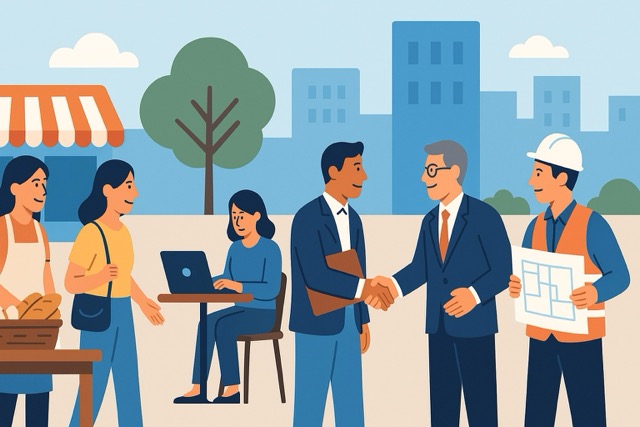
You don’t need a billion-dollar budget to create meaningful change in your community. Real economic development starts with targeted, achievable actions that address the needs of local businesses, job seekers, and residents. When you build a stronger local economy, you’re not just improving income or tax revenue—you’re creating a place where people want to live, work, and invest. This article walks you through 12 actionable strategies that can drive growth, support entrepreneurs, and increase resilience in your region. Whether you’re in public leadership, run a community organization, or work in local business development, these steps will help you make measurable progress.
1. Support Local Businesses with More Than Just Promotion
Encouraging people to shop locally is a great start—but local businesses need structural support to grow. That means removing red tape, improving permit processes, and offering direct access to small grants or microloans. You can also host workshops or training sessions to help business owners navigate taxes, hiring, or digital marketing. Don’t underestimate the impact of a business-friendly city hall—it can be the difference between a small business surviving or shutting down.
When you create a directory or local marketplace that features homegrown brands, you also build community pride and give residents more reasons to spend nearby.
2. Prioritize Workforce Development and Real Skills Training
Attracting new businesses often comes down to one question: “Is there a qualified workforce here?” If you can answer yes—with proof—you’ve got an edge. Start by partnering with vocational schools, community colleges, and technical training programs. Make sure your local curriculum reflects what industries actually need.
Apprenticeships, credentialing programs, and job placement pipelines help students connect directly to opportunities. For adult workers looking to reskill or reenter the workforce, focus on short-term, career-focused programs. When people can earn certifications and get hired within six months, you strengthen families and fill talent gaps at the same time.
3. Improve Core Infrastructure Without Ignoring the Basics
Infrastructure is more than roads and bridges. It includes broadband access, public transport, water systems, and reliable utilities. If your community lacks any of those, you’re limiting who can build a business or take a job. Focus on infrastructure projects that unlock access—whether that’s fiber internet in underserved neighborhoods or transportation routes connecting people to industrial job hubs.
Walkability, transit, and even signage upgrades also shape how inviting a place feels. These improvements help retail corridors thrive and make it easier for tourists and locals alike to move between key locations.
4. Make Your Area a Destination Through Smart Tourism
You may not have beaches or world-famous landmarks, but that doesn’t mean your region can’t attract visitors. Local events, cultural festivals, historical tours, or food experiences can draw travelers and pump money into hotels, shops, and restaurants.
Build partnerships with tourism boards, chambers of commerce, and event organizers to create themed weekends or heritage trails. Promote these efforts with digital campaigns, and make sure your local website is visitor-friendly. When tourists spend even a single weekend locally, those dollars recirculate through dozens of small businesses.
5. Foster a Local Startup Ecosystem
Every community has people with ideas—they just need access to resources. Create spaces where those ideas can grow: business incubators, co-working hubs, or accelerators designed to help founders move from concept to customer.
Offer pitch nights, mentorship programs, and funding introductions. Help first-time founders learn how to write a business plan, access capital, or protect intellectual property. Don’t focus only on tech—support Main Street entrepreneurs too. When you create a safe space to launch, you unleash a new layer of innovation and energy into your economy.
6. Use Public-Private Partnerships to Multiply Impact
You don’t have to carry the full load of funding and executing economic development projects. Public-private partnerships can unlock capital and expertise you wouldn’t otherwise access. Whether it’s redeveloping a vacant site, upgrading infrastructure, or running a training program, involve local banks, construction firms, or anchor institutions.
Structure deals transparently, set clear ROI goals, and ensure community benefit agreements are part of the process. When both sectors win, the public sees tangible results faster.
7. Integrate Sustainability Into Economic Growth
Being forward-thinking means building not just for today—but for the next generation. Encourage sustainable construction, energy-efficient upgrades, and low-waste operations in local business practices. Offer incentives for green tech, urban farming, or renewable energy installations.
By reducing long-term operating costs and aligning with climate goals, you not only protect your environment—you create new markets and jobs. Green jobs and clean energy startups bring investment from sectors actively looking to scale.
8. Expand Access to Capital for Underserved Entrepreneurs
Many local entrepreneurs—especially first-time founders or minority-owned businesses—struggle to access funding. Work with local lenders to create small loan programs that minimize collateral requirements. Encourage the formation of community development financial institutions (CDFIs) that specialize in mission-aligned lending.
Pair funding with financial literacy and credit-building programs. Make it easier to understand balance sheets, cash flow, and pitch decks. When more people can access capital, your economy becomes more inclusive and resilient.
9. Engage Residents in Decision-Making
Economic development works best when people feel like they’re part of the process. Host community forums, use open data dashboards, and create advisory boards made up of residents, not just officials. When people see their feedback reflected in final decisions, trust goes up—and so does participation.
Transparent communication and public ownership over big projects—like rezoning or tax incentives—reduce friction and keep the process moving. It’s not just about informing people. It’s about listening and adjusting based on real needs.
10. Use Land Strategically and Keep Affordability in Sight
Economic growth should not price out the people you’re trying to help. Mixed-use zoning, infill redevelopment, and smart density planning can help you revitalize underused areas without spurring displacement.
Support affordable housing near job centers. Invest in childcare facilities, walkable public spaces, and transit corridors that connect working residents to opportunity. When land is managed wisely, you avoid over-concentration and keep long-time residents rooted.
11. Lean Into Technology and Innovation
Smart cities aren’t just for urban giants. Your town or region can integrate basic technologies—like digitized business permitting, online grant applications, or even real-time transit data—to streamline local services.
Tech startups often look for affordable places to scale, especially if there’s a steady talent pipeline. Create partnerships with regional universities or coding bootcamps, and offer coworking spaces with high-speed internet. When you welcome innovation, you make your community more competitive.
12. Measure What Matters and Keep Adjusting
It’s easy to launch a program and move on—but you need to know what’s working. Track employment data, business openings, new investments, and community sentiment. Set KPIs and revisit them every quarter.
Use surveys, heat maps, and economic modeling to evaluate progress. Share those results with the public. People appreciate honesty, and regular reporting gives you a chance to course correct before small problems become big ones.
How Can You Strengthen Local Economic Development?
- Support small businesses with funding and training
- Invest in infrastructure and broadband
- Align workforce training with job needs
- Promote local tourism and culture
- Encourage startups and innovation hubs
- Use public-private partnerships to scale impact
- Prioritize equity and affordability in planning
In Conclusion
Economic development isn’t abstract—it’s something you build one step at a time. By focusing on targeted actions, smart investments, and inclusive growth, you create a place where people want to stay, where businesses want to expand, and where future leaders can take root. You’re not just building an economy—you’re shaping a community that thrives. The momentum starts when local vision turns into action.
Want to receive regular insights and actionable advice on strengthening local economies directly in your inbox? Consider subscribing to my Substack.

Kevin Tudhope is Operations Manager at Equity Investment Mortgage with 10+ years in the mortgage industry. Founder of Tudhope Management Inc., he also leads local franchise operations in Auburn–Opelika and mentors first-time homebuyers and entrepreneurs.